Skip to content
TakPhoto

Schengen Visa Photo

VerifiedChecked against the official source on 2026-09-22.Official requirements

Quick facts

What a Schengen Visa Photo must look like, from our document catalogue.

Photo size
35×45 mm
Digital size
413×531 px
Head height (chin to crown)
32–36 mm
Background colour
#FFFFFF (also accepted: #E5E5E5)
Print resolution
300 DPI
Glasses
Allowed, with no glare and no tinted lenses
Head covering
Religious head covering allowed, with the whole face visible
Expression
Neutral, mouth closed, both eyes open

Before and after

The same snapshot, straightened, cropped and put on the background this document asks for.

Illustration of a finished Schengen Visa Photo

Get this photo now

Illustration of a finished Schengen Visa Photo

We check every rule above before you pay.

This text has not been translated yet and is shown in English.

How to take a Schengen visa photo with your phone

One photo covers the whole Schengen area: 35×45 mm, the head 32–36 mm from the chin to the crown, which works out at 70–80% of the picture height. Whether you apply in Paris, Prague or Riyadh, the consulate is measuring the same rectangle, and it is the tightest of the mainstream formats — the top of the hair sits a few millimetres below the upper edge and the shoulders barely enter the frame.

Shoot it looser than that and crop afterwards. Stand about 1.5 metres from a plain white wall, phone at your eye level, rear camera, daylight coming at you from a window. Hold your head straight rather than tilted up: a chin lifted even slightly shortens the chin-to-crown measurement the reviewer takes, and a photo that measures 30 mm where 32 was needed is refused for a reason nobody can see by eye. We measure the head and place it in the frame for you once the picture is uploaded.

Why a Schengen visa photo comes back

The background is plain white, or a very light neutral grey where the consulate accepts one, with no pattern, no furniture edge and no shadow behind the head. Two lamps at equal distance, or a window, will fix most of what a single ceiling light breaks.

The rest is ICAO: a neutral expression with the mouth closed, both eyes open and clearly visible, no glare on glasses and no tinted lenses, and a head covering only where it is worn for religious reasons and the face stays fully visible from the chin to the forehead. The photo has to be recent — six months is the usual limit — and consulates dislike seeing the same portrait that already sits on an earlier visa sticker in your passport, so take a fresh one rather than reprinting the old file.

Where a Schengen visa photo is used

You submit it to the consulate or visa centre of your main destination, and the same file is accepted for short-stay, transit and, in most countries, national long-stay applications. The 35×45 mm rectangle is also what German, French and most other European residence and identity paperwork uses, so the picture keeps working after the trip. The geometry follows the ICAO template published as the official photo sample chart (Fotomustertafel).
Written by TakPhoto editorial, last checked 23. september 2026.

Accepted and rejected examples

The same person six times. The three on the left follow the rules above; the three on the right are the mistakes we see most.

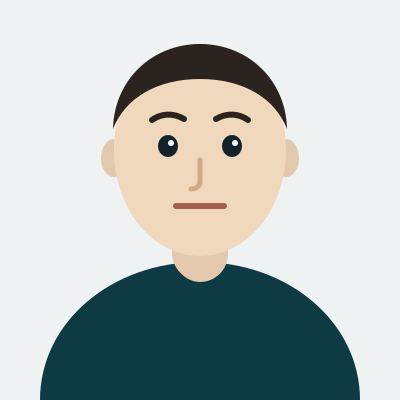
  • Illustration: a centred head and shoulders on an even, plain background
    Accepted

    Even light, plain background

    Daylight from the front, no shadow on the wall, background a single flat colour.

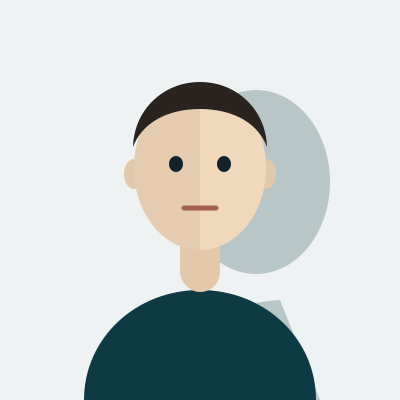
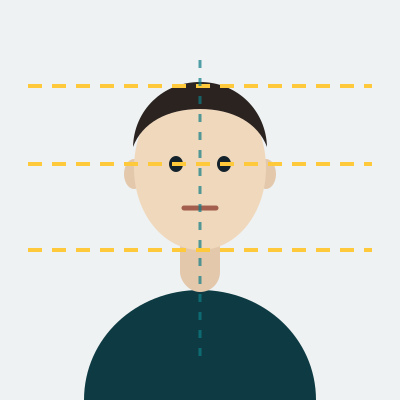
  • Illustration: a straight, centred head with the eye line marked
    Accepted

    Head straight and centred

    Eyes level, shoulders square to the camera, the whole face visible from chin to crown.

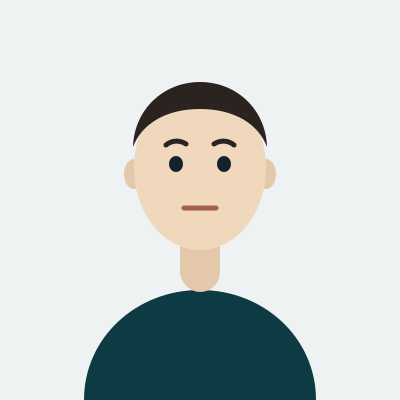
  • Illustration: a neutral face with the mouth closed and both eyes open
    Accepted

    Neutral expression, eyes open

    Mouth closed, both eyes open and unobscured, hair away from the eyes.

  • Illustration: a head casting a hard shadow on the wall behind it
    Rejected

    Shadow on the background

    A lamp behind the camera throws a hard shadow, so the background is no longer one colour.

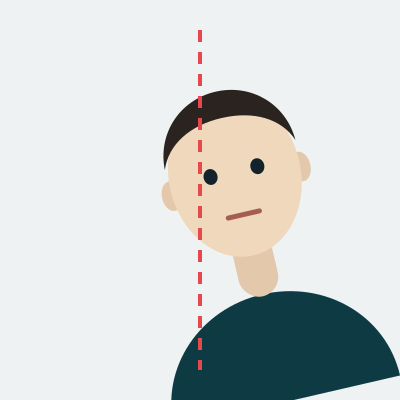
  • Illustration: a tilted, off-centre head inside the frame
    Rejected

    Head tilted or off centre

    The face is turned away from the lens and sits off the centre line, so the measurements fail.

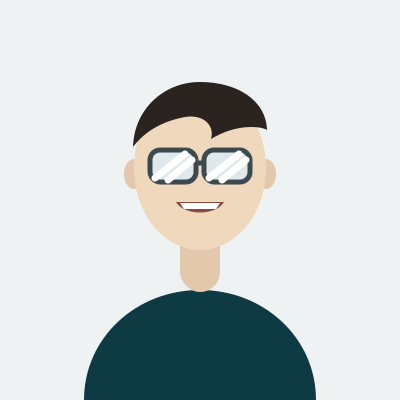
  • Illustration: a smiling face with glare across the glasses
    Rejected

    Glare, smile or covered eyes

    Reflections on the lenses, a smile with visible teeth, or a fringe across the eyes.

The most common reasons this photo comes back

Each of these is checked automatically before you pay, so you find out in seconds rather than weeks.

  1. The background is not #FFFFFF (also accepted: #E5E5E5)

    A patterned wall, a second colour, or a shadow behind the head all break the plain background this document requires. We replace the background with the exact colour above.

  2. The head is the wrong size in the frame

    The head must measure 32–36 mm from chin to crown. Standing too close makes it too large, and a cropped snapshot usually makes it too small.

  3. Reflections on the glasses

    Glasses are accepted, but a reflection across either lens hides the eye underneath and the photo is refused. Turn away from the lamp or take the glasses off.

  4. Smiling or speaking

    The expression must be neutral, with the mouth closed and both eyes open. A smile changes the distances between the facial landmarks the check measures.

  5. Blurred or low resolution

    A photo of a printed photo, a screenshot, or an image scaled up from a small crop loses the detail the clerk looks for. Shoot with the rear camera, not a screenshot.

  6. Uneven light on the face

    One lamp on one side leaves half the face dark. Face a window, or use two light sources at the same distance.

Questions about the Schengen Visa Photo

What size is a Schengen Visa Photo?
A Schengen Visa Photo is 35×45 mm, which is 413×531 px at 300 DPI. Print it at exactly that size: a photo enlarged from a smaller crop loses the detail the clerk checks.
What background colour does a Schengen Visa Photo need?
The background must be #FFFFFF (also accepted: #E5E5E5), plain and evenly lit, with no shadow behind the head. Any pattern, second colour or visible shadow is a rejection.
How big must the head be in a Schengen Visa Photo?
The head must measure 32–36 mm from the chin to the top of the crown, centred in the frame with the eyes looking straight at the lens.
Can I wear glasses in a Schengen Visa Photo?
Allowed, with no glare and no tinted lenses. This is the rule the office applies to a Schengen Visa Photo, and it is one of the checks we run before you pay.
Can I smile in a Schengen Visa Photo?
No. The expression must be Neutral, mouth closed, both eyes open, because the distances between your facial landmarks are what the document is measured on.
Can I take a Schengen Visa Photo with my phone?
Yes. Use the rear camera, stand about 1.5 metres from a plain wall in daylight, and we handle the crop to 35×45 mm, the background and the head height for you.
How much does a Schengen Visa Photo cost here?
One small one-off fee, with no account and no subscription, and you only pay after the photo has passed every check above. The current price is on the pricing page.
How long does a Schengen Visa Photo take?
About 30 seconds from the moment you upload: the checks, the crop and the background run immediately, and you download the digital file and a printable sheet straight away.

Was this page helpful?